Compare 3 humanoids
Faraday Future Nova Mini, Hiwonder AiNex, Robosen Interstellar Scout K1 compared on the things that decide a purchase: price, capability, what actually ships, and estimated costs to your destination.
Delivered price, head to head
Base-machine prices delivered to United States, by the cheapest route on record.
Faraday Future
Nova Mini
$310
to $343 landed
Domestic, no import
Lowest delivered price
Hiwonder
AiNex
$1,123
to $1,231 landed
Robosen
Interstellar Scout K1
$492
to $582 landed
Delivered to United States: the import estimate (machine plus freight, Sales tax (0%), robot duty, and broker), or a seller in your own market where one lists the machine for less. Accessories excluded. Check configuration and request a seller quote on each robot's datasheet.
About 40% on China-origin collected today: the 2.5% MFN base, 25% Section 301 List 1, and the 12.5% Section 301 forced-labor duty effective 24 Jul 2026 with no expiry. It began the same morning the 10% Section 122 surcharge lapsed, so the total rose from about 37.5% rather than falling to 27.5%. Confirm the live rate before ordering. Under review; next checked 2026-11-27.
Compare the details
20 rows, 13 with differences
Scroll within the table to see all details. Model names and row labels stay visible. Unknown specifications remain marked as not published.
| Specification |  Faraday Future Nova Mini | 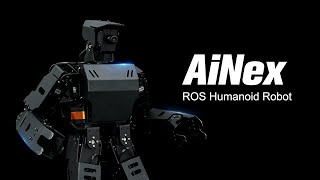 Hiwonder AiNex |  Robosen Interstellar Scout K1 |
|---|---|---|---|
| Priced configuration | See seller configuration | See seller configuration | See seller configuration |
| Listed price | $299 | $729.99 | $299 |
| Class | Hobby | Hobby | Hobby |
| Who can buy | Consumer | Consumer | Consumer |
| Status | Shipping now | Shipping now | Shipping now |
| Capability rating | 2/5 | 3/5 | 2/5 |
| Maturity rating | 5/5 | 5/5 | 5/5 |
| Origin | United States | China | China |
| Size class | Desktop | Desktop | Desktop |
| Height | 34.9 cm / 1 ft 2 in | 41.5 cm / 1 ft 4 in | 34.9 cm / 1 ft 2 in |
| Footprint (W x D) | 17.6 x 9.9 cm | 16 x 11 cm | 9.9 x 17.6 cm |
| Weight | 0.94 kg | 2.45 kg | 0.94 kg |
| Degrees of freedom | 17 | 20 | 17 |
| Battery (listed) | 50 min | Not published | Not published |
| Payload (listed) | Not published | Not published | Not published |
| Hands | No hands, none offered | Hands sold separately, priced by quote | No hands, none offered |
| Out of the box | Walks, turns, stands up on its own, keeps balance and does a forward roll, per FF's launch release. Comes with preloaded actions and dance routines and built-in voice command words (you can add your own). Bluetooth connects out of the box with no Wi-Fi setup. FF says it is ready for a demo with no programming. | Walks with self-stabilizing inverse kinematics, follows lines, tracks objects, and grasps (Standard Kit), controlled from a phone app or gamepad. Works day one without programming. | Walks, dances (9 dance moves in the app) and performs 44 pre-installed actions by voice command (41 words) or from the mobile app over Bluetooth. |
| Development access | FF's FAQ: 'Nova Mini supports block-based graphical programming and manual pose-record-playback teaching, plus user-defined voice commands. A full developer SDK is not published.' No ROS, Python, Scratch or API is documented. A USB data port is listed with no stated use, and OTA firmware updates are mentioned. The larger FF Nova, not this robot, is the one FF describes with an open SDK and ROS 2. | Real ROS with Python, OpenCV, and Gazebo simulation. Hobby servos and Pi compute cap research use, but it is genuine ROS, not a toy app. | No SDK, ROS or open-source support found on the Robosen product page. Programming is inside the Robosen app (block-based or manual pose editing). |
| Best for | US parents and teachers who want a $299 programmable humanoid for kids' coding and demos, not developers who need an SDK. | Classrooms and self-learners who want to teach ROS and inverse kinematics on a real walking biped. | A family or a beginner who wants a small walking, dancing humanoid they can program by blocks in a phone app. |
| Listing checked | 2026-10: sources for Faraday Future Nova Mini | 2026-10: sources for Hiwonder AiNex | 2026-11: sources for Robosen Interstellar Scout K1 |
Listed prices may cover different configurations and tax terms. Use the delivered estimates above for your destination. Battery and payload figures are manufacturer specifications, not results from a shared test.
Nova Mini
In the box
- FF Nova Mini humanoid robot (17 servos, aluminum-alloy frame)
- Power adapter (output DC 8.4V 2A)
- Preloaded actions and dance routines, plus firmware updates (software)
Not included
- A developer SDK (the page says 'A full developer SDK is not published')
- Python, Scratch or ROS programming (only block-based programming and pose teaching are documented)
- The $499 curriculum and teacher training (sold separately)
- Hands or grippers (none listed; each arm has 3 servos)
- A camera or vision sensing (none listed in the specs; the listed sensing is voice commands)
- Shipping, sales tax and the extended warranty (not priced on the page)
AiNex
In the box
- Pre-assembled biped
- Raspberry Pi 5 (2GB in the entry Starter Kit)
- 120-degree HD camera
- 11.1V 3500 mAh LiPo battery
- Charger
- ROS-based software stack
Not included
- Gripper hands on the Starter Kit (Standard Kit only)
- Torque-controlled actuators (hobby serial-bus servos only)
- Research-grade capability
Interstellar Scout K1
In the box
- K1 robot
- Battery adapter (input 100-240V, output DC 8.4V 2A)
- USB data cable (per the peripheral interface listing)
Not included
- Hands that grasp (the hands are fixed, 3 servos per arm)
- Open SDK, ROS or Python access (control is by the Robosen mobile app or voice)
- Wi-Fi (Bluetooth 4.2 only)
- Spare battery
- The Pro's larger voice-command set (K1 has 41 voice commands, Pro has 81)
What the evidence tells you
- Highest capability rating
- AiNex: 3/5.
- Highest maturity rating
- Nova Mini, AiNex, and Interstellar Scout K1 share 5/5 (tied).
- Lowest listed weight
- Nova Mini and Interstellar Scout K1 share 0.94 kg (tied).
Capability and maturity are editorial ratings based on specifications and sales availability. They do not measure reliability, autonomy, or performance on your task. Each datasheet shows the scoring factors.