Humanoid Robots: What You Actually Get
· 53 min read · Yuma Heymans · Updated
The honest, in-the-box reality of buying a humanoid robot in 2026: what ships, what does not, and what the sticker price hides.
The Unitree G1 sells for $13,500 on the official shop, and its arms end in non-functional stubs. To make that same robot grasp a coffee cup, you do not spend a few hundred dollars on an accessory. You buy a different robot (the EDU tier, from $43,900), then add a pair of dexterous hands that can cost $13,000 to $50,000 on top - hands that, in the case of the five-finger Unitree Dex5-1, are listed at $25,000 each at Unitree's US partner - RoboStore. A pair of hands can cost more than the robot carrying them. That single fact captures the gap between what a humanoid robot looks like in a launch video and what actually arrives in the crate.
Here is the problem this guide exists to fix. The public narrative around humanoids in 2026 is built almost entirely from teleoperated demos, rendered concept films, and headline prices that describe a stripped-down base unit nobody in a lab actually uses. A first-time buyer reads "$13,500 humanoid robot" and pictures a machine that folds laundry. What they get, if they buy that exact SKU, is a walking, voice-chatting demo box with no hands, no ability to run their own code, roughly two hours of battery, and a manufacturer that explicitly warns it "has a complex structure and extremely powerful power" and to "keep a sufficient safe distance" - Unitree. The distance between marketing and reality here is not a rounding error. It is the whole purchase.
This guide breaks down exactly what is in the box (and what is conspicuously not), the five-figure hand economics that drive every pricing tier, the teleoperation-versus-autonomy truth that vendors carefully avoid saying out loud, the EDU and SDK locks that make the cheap version unprogrammable, the battery and thermal reality that ends demos after 90 minutes, the real skills and hardware you need to get past joystick mode, the total cost of ownership that runs 36 to 42% above sticker, and the safety facts that keep every metal-skeleton humanoid out of homes. It is written for a non-technical buyer who wants the truth before wiring money to Shenzhen. Every number is real and sourced, and where the market is genuinely unsettled, this guide says so rather than pretending.
Contents
- First principles: what you are actually buying
- Hands are sold separately: the five-figure end-effector
- There is no autonomy in the box
- EDU and SDK locks: the cheap version cannot be programmed
- Battery reality: 90 to 120 minutes, then swap or wait
- The real skill requirements: ROS2, simulation, and a GPU
- Total cost of ownership: the sticker is two-thirds of the bill
- Safety: 35 to 70 kg of falling metal
- What buying actually looks like
- A decision framework for real buyers
1. First principles: what you are actually buying
Start with the structural question, not the surface one. The surface question is "which humanoid should I buy?" The structural question is "what does a humanoid robot, as a product, actually consist of in 2026, and which parts come in the box?" A humanoid is not one product. It is a stack of at least four loosely coupled products sold on separate price lines: a locomotion chassis (legs, torso, actuators, balance controller), an end-effector layer (hands or grippers), a compute-and-autonomy layer (the brain that would let it do useful work unattended), and a development unlock (the SDK and permissions that let you change any of it). The headline price you see almost always buys only the first of these four, and sometimes only a locked version of it. Understanding this is the difference between a good purchase and an expensive surprise.
Why does the market work this way? Because the hardest, most expensive, and fastest-changing parts of a humanoid are precisely the ones that are easiest to sell separately. Dexterous hands wear out, break, and improve on a different cadence than legs, so makers ship them as swappable modules on standard wrist flanges rather than welding them on. Autonomy software is where the real value and the real research frontier sit, so it is gated behind developer tiers, licensing, and compute you have to buy. The result is a category where the cheapest configuration is deliberately the least capable, and the "complete" machine you imagined is assembled from a base chassis plus thousands of dollars of add-ons plus your own engineering. The catalog at HumanoidStore exists precisely to make this legible: it lists what each robot really ships with, verifies the price against live listings, and maps whether you can even get one delivered. This guide is the long-form version of that honesty.
The first practical filter is deceptively simple: is the robot you want even purchasable? A huge share of the machines in the public imagination cannot be bought by anyone outside an enterprise partnership. Tesla Optimus has no public sales, no pre-orders, and no waitlist (any "pre-order Optimus" page is a scam, as our Tesla Optimus price guide explains), Figure 03, Apptronik Apollo, and Agility Digit are enterprise and Robots-as-a-Service only, and every 2026 Boston Dynamics Atlas is committed to Hyundai and Google DeepMind, with other customers from early 2027 - Boston Dynamics. What you can actually buy in mid-2026 is a narrower set: Unitree ( R1, G1, H2, the superseded H1 while dealer stock lasts, and their EDU variants), Booster (K1, T1), a handful of Chinese bipeds (EngineAI, Noetix), education platforms (NAO 6, ROBOTIS OP3), and the one Western consumer home robot on preorder, 1X NEO (UBTech's China-only UWORLD U1 is a companionship counterpart, not a chore robot). Everything in this guide is about that purchasable set, because a guide about robots you cannot buy is a guide about press releases.
Once you see a humanoid as four products rather than one, every confusing thing about the market resolves. The $13,500 G1 and the $73,900 G1 are the same chassis with different answers to products two, three, and four. The reason a warehouse humanoid cannot be bought off a checkout page is that its value lives almost entirely in product four, the autonomy, which is not something a vendor can hand you in a crate. And the reason demos look so far ahead of what you can buy is that the demos are showing you a human operator standing in for the autonomy layer that does not yet ship. The rest of this guide walks each layer in turn, with the real numbers.
It is worth pausing on why this decoupled structure emerged, because it is not an accident of Chinese manufacturing or a temporary state that will resolve as the technology matures. It is a rational response to three facts about where value and difficulty actually sit in a humanoid. First, locomotion (getting a biped to walk, balance, and recover) is now close to a solved commodity: several Chinese factories can produce a walking chassis for a few thousand dollars, which is exactly why the base R1 can sell for $5,900. When something becomes commoditized, its price collapses toward the cost of the metal, and that is what the headline numbers reflect. Second, manipulation (the hands) remains genuinely hard and improves on a monthly cadence, so welding a fixed hand onto a chassis that will outlive three generations of hand design would be a waste; makers ship the hand as a module you replace. Third, autonomy is the actual product frontier, the place where a decade of research and billions of dollars are still being spent, so no vendor gives it away with a chassis. The four-product structure is the market telling you, through its pricing, exactly which parts are cheap and solved and which are expensive and unsolved.
This also explains a pattern that confuses first-time buyers: why the same robot appears at wildly different prices across sellers, and why a "review" of the G1 can describe a machine that grasps objects while the shop page describes one with stubs. The reviewer almost always has an EDU unit with hands, provided by the manufacturer or bought by a lab, and is reviewing product one plus two plus four. The shop page is selling product one, locked. Neither is lying; they are describing different configurations of the same name. The lesson for a buyer is to treat the model name (G1, T1, H2) as a chassis family, not a product, and to always ask which configuration a given price, video, or review actually refers to. The rest of this guide walks each layer in turn, with the real numbers.
2. Hands are sold separately: the five-figure end-effector
The single most counterintuitive fact for a new buyer is that most humanoids ship with no functional hands, and that adding hands is not an accessory purchase but a second major purchase. This is not a quirk of one cheap model. It is the structural norm across the entire category, driven by a simple engineering reality: the human hand is the hardest thing in robotics to replicate, the fastest-evolving component, and the part most likely to break, so makers decouple it from the body and sell it as a swappable module. The consequence for your budget is severe. The gap between a humanoid that gestures and a humanoid that grasps is measured in tens of thousands of dollars.
Consider the exact numbers on the most popular platform. The base Unitree G1 at $13,500 does not include dexterous hands at all; its arms end in non-functional stubs, and hands appear only as an option on the EDU version, where the three-fingered force-controlled hand adds seven optional degrees of freedom per hand - Unitree. The Unitree Dex3-1 (three-finger, 7 DOF per hand, 500 g object payload) is listed at $6,500 per single hand at RoboStore, so a pair adds $13,000, and those hands are only compatible with G1 EDU-tier robots and higher, not the base G1 - RoboStore. Step up to the five-finger Unitree Dex5-1 (20 DOF: 16 active plus 4 passive, roughly 10 N fingertip force) and the price is $25,000 for a single hand at the same reseller - RoboStore. The independent Inspire Robots RH56 series, the five-finger hands bolted onto many Chinese humanoids, run $4,500 per hand without an integrated wrist and $6,500 with wrist at KnoxLabs - KnoxLabs.
Because the hand is a discrete product with its own price line, it is worth seeing what one actually looks like, since a "5-finger dexterous hand" is doing a lot of work in a spec sheet.
The part that is not in the box
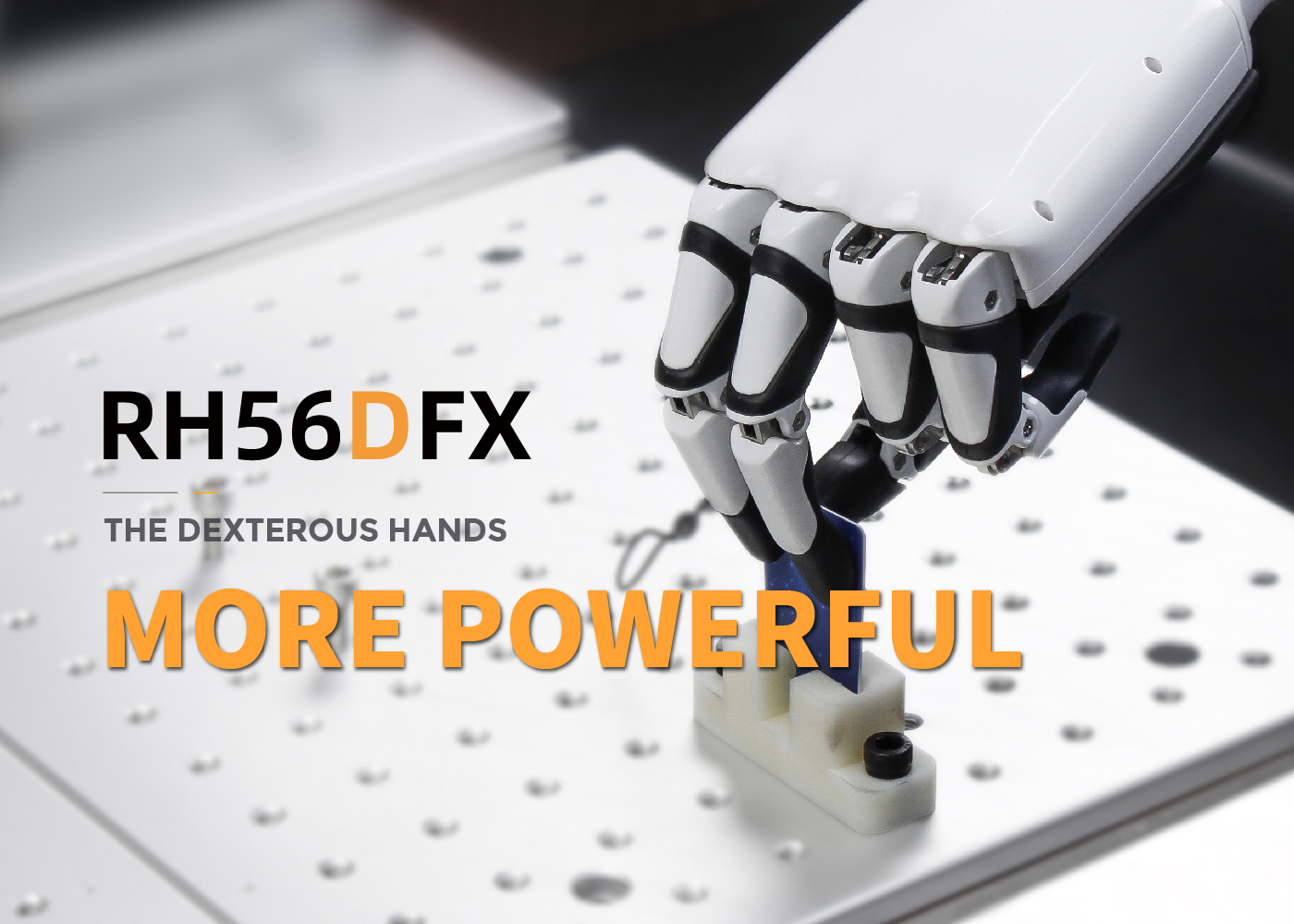
Hand choice is not a footnote to humanoid pricing. It IS humanoid pricing. Unitree's G1 EDU price list runs from $43,900 (the U1 configuration, with dummy hands) through roughly $54,900 (Dex3-1 hands) to $73,900 (Inspire five-finger hands plus seventeen tactile sensors), per the configuration table at botinfo.ai. The jump from no hands to sensorized five-finger hands adds around $30,000 to a single robot. The same pattern repeats on the Booster T1: the standard has 23 DOF and no hands, a gripper version has 31 DOF, and a dexterous-hand version has 41 DOF. No US seller currently publishes a T1 list price (the former US distributor dropped the line), so today a new standard T1 is bought in the EU at EUR 39,795 including VAT, delivered duty paid from OpenELAB, but the shape of the ladder is the same: every step up in hands adds DOF and cost. Every place you look, the DOF count and the price climb together, and both are being driven by what is on the end of the wrist.
The reason swappable end-effectors are the norm, rather than an inconvenience, is that hands are the most task-specific part of the machine. A robot picking bins wants a rugged two-finger gripper; a robot doing assembly wants a sensorized five-finger hand; a robot doing neither wants nothing on its wrists at all. Inspire explicitly markets its hands as compatible with standard humanoid wrist flanges over RS485 or CAN, and Unitree's H2 can be factory-specced with either Dex5-1 five-finger or Dex3-1 three-finger hands - Inspire Robots. You are meant to pick grippers versus dexterous hands per task, which is sensible engineering but brutal on a naive budget. The following chart shows how quickly the number climbs as you move up the hand ladder, per hand, at current US reseller prices.
There is a deeper reason hands are so expensive, and understanding it protects you from assuming the price will fall to accessory levels soon. A dexterous hand is not a scaled-down version of the robot; it is the single densest concentration of engineering on the whole machine. A five-finger hand like the Dex5-1 packs 20 degrees of freedom, 16 of them actively driven, into a volume the size of a human hand, which means 16 tiny motors, 16 sets of gearing, position sensors on every joint, and often tactile arrays on the fingertips, all wired through a wrist that must survive being slammed into a table when a grasp fails. The Inspire RH56E2 variant delivers 30 N of thumb force with tactile arrays, which is a lot of force to generate and control in a finger. That density is why a single hand can cost as much as a used car, and why the price has not collapsed the way the walking chassis did. Legs got cheap because bipedal locomotion became a solved, mass-manufacturable problem. Hands stayed expensive because dexterous manipulation is still, in mid-2026, an open research problem being solved one actuator at a time.
The practical takeaway, with numbers, is the sentence every honest salesperson should say first: a "complete" G1 that can actually grasp objects is not a $13,500 purchase. It is a $43,900-plus EDU chassis plus $13,000 to $50,000 of hands, which means the hands can cost more than the robot that carries them. If manipulation is your reason for buying, budget for the hands before you fall in love with the chassis price. This is exactly the axis that separates a demo machine from a working platform, and it is invisible on the product page that quotes you the base price. Consumer robots are the exception that proves the rule: the 1X NEO includes hands because it is sold as a finished home product, not a research chassis, which is precisely why its whole economic model is different.
One more piece of buyer's math is worth spelling out, because it changes how you compare seemingly similar robots. When a spec sheet advertises a higher degree-of-freedom count (23 versus 31 versus 41 on the Booster T1), a large share of that difference is the hands, and the DOF number is quietly a proxy for how much end-effector you are buying. A 41-DOF T1 is not a fundamentally more agile body than a 23-DOF T1; it is a 23-DOF body with roughly 18 DOF of dexterous hands bolted on, and the price gap between the two is mostly the hands, not the robot. So when you compare two humanoids and one has a much higher DOF count at a much higher price, do not read that as "more robot." Read it as "the hands are included in this configuration," and then check whether you actually need those hands for your task. A demo or events robot needs none; a manipulation research platform needs the best you can afford. Buying dexterous hands you will never use is one of the most common ways a first purchase goes over budget for no operational benefit.
3. There is no autonomy in the box
Now the layer that vendors are most careful about. In mid-2026, no purchasable humanoid does useful autonomous work out of the box. Read that again, because the entire marketing apparatus of the industry is designed to blur it. What you actually get on day one is joystick or app control, a library of pre-scripted demo motions, and, if you invest in the gear, VR teleoperation where a human drives the robot. "AI-powered" on a spec sheet almost always means the robot can talk about what its camera sees, not that it can decide what to do and do it. The gap between a scripted demo and genuine autonomy is the single most misunderstood thing in the category, and it is worth building up from first principles.
There are three distinct things that all get called "the robot working," and they are not the same. Scripted demos are pre-programmed motion sequences, dancing, a kung-fu routine, a wave, triggered from a controller or app; the robot is a very expensive player piano. Teleoperation is a human driving the robot in real time, usually through a VR headset, so the intelligence in the loop is entirely human; the robot is a puppet. Real autonomy is the robot perceiving a novel situation, deciding what to do, and executing it without a human in the loop; this is the thing that would make a humanoid an appliance, and it is the thing that essentially does not ship. Out of the box, the Unitree G1 gives you stable walking (up to about 2.0 m/s), balance recovery, pre-programmed gestures, and demo loops from the handheld controller or app, per the Silicon Valley Robotics Center review. It does not autonomously walk through unfamiliar spaces or complete novel manipulation tasks. That is not a defect. It is the state of the art for a purchasable unit.
The most instructive product in the entire market on this point is the 1X NEO, precisely because 1X is the most honest about it. NEO is a $20,000 home robot (or $499 per month, US-only, deliveries from late 2026), and its headline feature is not autonomy but the opposite: a human employee at 1X can remotely drive it. The official 1X announcement lays out the teleoperation-first model that the rest of the industry hides.
1X's own order page states that "for complex tasks NEO doesn't know, an Expert from 1X can remotely supervise its actions at scheduled times," which in plain language means a company employee can see inside your home through the robot's cameras and drive it - 1X. 1X's own estimate is roughly 60 to 70% autonomous operation initially, with 80 to 90% projected for 2027 (a company projection, not independently verified), and the day-one autonomous skill list is modest even in 1X's marketing: opening doors, fetching items, turning off lights - Engadget. The most important thing about NEO is that it is the honest version of what every other home-humanoid pitch is quietly assuming. Where NEO says "a human will drive it," the flashier demos simply put the human off camera.
That brings us to the demo-versus-reality gap, which is documented rather than alleged. Tesla's October 2024 "We, Robot" Optimus units that poured drinks and played rock-paper-scissors were teleoperated by humans in motion-capture suits, a fact Tesla did not disclose at the event and that later reporting confirmed, with a Tesla executive acknowledging the robots were "human-assisted to some extent" - TechCrunch. Roboticists could tell from the upper-body movement alone. A 2026 Robotics Summit report separately flagged that impressive humanoid demos like cocktail mixing and laundry folding "remain teleoperated or constrained to scripted chores" - humanoid.guide. When you watch a humanoid do something dexterous and human-like in a video, the correct default assumption in 2026 is that a person is driving it, not that the robot decided to do it.
If autonomy does not come in the box, where does it come from? You build it or you buy it, separately, and only on the developer tier. On Unitree EDU units you can deploy models yourself: NVIDIA's open humanoid foundation model Isaac GR00T N1 (the GitHub repo is at N1.7 as of mid-2026) takes language and image input to drive manipulation, and NVIDIA has announced a reference humanoid built on a Unitree H2 chassis with Jetson Thor compute shipping from Unitree in late 2026 - NVIDIA. But deploying GR00T-class policies requires the EDU tier, a GPU workstation, ML engineering, and time. It is not a firmware toggle. The practical reality is that teleoperation is how you get real capability on day one: Unitree publishes an official xr_teleoperate stack for driving G1 and H1 with an Apple Vision Pro, PICO 4 Ultra, or Meta Quest 3, and a trained teleoperator collecting manipulation demonstrations manages only about 5 to 8 recorded demos per hour on tabletop tasks.
It helps to understand why teleoperation is not just a stopgap but the actual economic engine of the whole field, because that reframes what you are buying. Every serious humanoid company needs enormous quantities of demonstration data (a human showing the robot how to do a task) to train the autonomy that does not yet exist. The only practical way to collect that data at quality is to have a human teleoperate the robot through the task hundreds or thousands of times. So teleoperation is simultaneously the thing you get on day one AND the mechanism by which autonomy is slowly being built. This is exactly why 1X's business model has customers' robots being teleoperated by 1X staff: every household task an Expert drives is a training example that improves the fleet's autonomy. When you buy into a teleop-first product, you are, in a real sense, contributing to the training set. That is not sinister, but it is worth knowing, and it is why the "60 to 70% autonomous, rising to 80 to 90%" projections exist at all: they are bets on how fast the collected demonstrations will accumulate, not measurements of a shipped capability. Collecting that demonstration data is itself paid work: AITraining.jobs, a job board we also built, lists the open robotics data roles, from collecting teleoperation data to labeling robot video, and what they pay.
The buyer's rule of thumb for mid-2026 falls out of this directly, and it is worth stating plainly before moving on. Any humanoid you can actually purchase is, on day one, a remote-controlled demo machine; it becomes a data-collection and development platform only if you have engineers; and it is autonomous only for the narrow behaviors you personally train or script. If your purchase case quietly assumes the robot will "do chores" or "work" unattended, that assumption is the thing to fix before you spend the money, because no product on the market in 2026 satisfies it without a human somewhere in the loop. The cleanest test to apply to any humanoid pitch is to ask a single question: in the video I just watched, was there a human driving? In 2026, if the robot is doing something dexterous, subtle, or improvised, the answer is almost always yes, and the honest vendors (1X being the clearest example) will tell you so directly rather than letting you assume otherwise.
4. EDU and SDK locks: the cheap version cannot be programmed
Here is where the cheap headline price does its most damage. Unitree and several peers split every robot into a locked base unit that only runs remote-control demos, and an EDU or developer tier, costing two to four times more, that unlocks programming. The base unit is not a cheaper version of the developer robot. It is a fundamentally different product that cannot run your code at all. A buyer who reads "$13,500 programmable humanoid" and orders the base G1 discovers, after wiring the money, that they bought a demo appliance with no supported path to ever becoming a development platform.
The specifics are stark. The official Unitree shop sells the base G1 at $13,500 and states plainly that it "does not support secondary development"; to program the robot you must contact sales for the EDU edition - Unitree shop, which US dealers sell from $43,900 to $83,900 depending on hands and compute, a 3.3x to 6.2x premium over Unitree's own Basic price, as our Unitree G1 price guide details tier by tier. What EDU actually adds is not cosmetic: the full Python, C++, and ROS2 SDK, an NVIDIA Jetson Orin module (100 TOPS) for onboard compute, the ability to deploy models, optional extra degrees of freedom, and hand compatibility. The base G1's "Basic CPU" cannot run your code, full stop, per the Basic-versus-EDU feature table at botinfo.ai. The same split exists downmarket: the $5,900 R1's standard version has an 8-core CPU and no meaningful developer access, while the R1 EDU starts at $15,950 and adds an NVIDIA Jetson Orin module, full SDK access, and optional hands - RoboStore. Warranty is tiered too, with the base G1 carrying fewer months of coverage than the EDU unit.
Not every maker plays this game, and the contrast is the single most useful thing a buyer can know. Booster Robotics ships full development access on every tier of the K1 and T1: Python and C++ APIs, ROS2, the Booster Studio IDE, an open-source RoboCup framework, and simulation support across Isaac, MuJoCo, Webots, and Gazebo, with tiers differing by compute rather than by SDK lock - Booster. Even the entry K1 is fully programmable. ROBOTIS OP3 and Fourier N1 are open in hardware and software both. So the "you must buy the expensive tier to program it" tax is a Unitree-style business decision, not a law of physics, and it is a genuine reason to compare a Booster K1 against a base Unitree R1 if programming is the point. The chart below shows the price of the unlock: the same chassis, base versus programmable.
Note what the Booster bars show: no unlock premium at all, because there is no lock. That is the whole argument. Where Unitree charges $10,050 on the R1 and $30,400 on the G1 to turn a demo box into a development platform, Booster ships the platform at the demo-box price. For a school or a lab on a fixed budget, that difference can decide the purchase before any spec comparison begins.
Why would two makers of similar robots choose such different models, and what does the choice tell you as a buyer? The lock is a strategy for extracting more revenue from the same hardware by segmenting customers: hobbyists and demo buyers pay the low price for the locked unit, while developers and labs, who have larger budgets and genuinely need the SDK, pay several times more for the unlock. It is textbook price discrimination, and it works because Unitree has the brand and the distribution to sustain it. The open model is a bet in the other direction: that shipping full access on every tier grows the developer community, seeds the platform in universities and RoboCup teams, and builds an ecosystem that eventually sells more robots. Booster's RoboCup pedigree and open framework are that bet in action. Neither approach is wrong, but the buyer implication is concrete: if you value the freedom to program and you resent paying a multiple for a software permission, the open platforms are not just cheaper, they are philosophically aligned with what you are trying to do, and they remove the single most common regret in this market, which is discovering after purchase that the cheap robot you bought can never run your code.
Jailbreaking the locked units is real but genuinely risky, and the risk is not just a voided warranty. Security researchers published UniPwn in September 2025, a Bluetooth Low Energy exploit giving root-level takeover of Unitree Go2, B2, G1, and H1 units because they shared a hardcoded AES key in the BLE setup interface; the flaw is wormable robot-to-robot, and the researchers went public after Unitree stopped responding - IEEE Spectrum. The same research found that powered-on G1 units automatically connect to telemetry servers and begin transmitting internal state, including audio, video, and spatial data, roughly every five minutes to servers in China - Help Net Security. There was earlier precedent in an undocumented remote-access tunnel described as a backdoor in the Go1 robot dog - Axios. The practical lesson is to treat any base-tier Chinese humanoid as a closed, phoning-home appliance and to isolate it on its own firewalled network, which is now standard advice for university and corporate buyers.
The buyer guidance here is unambiguous and saves real money. If your use case involves any programming, simulation, or model deployment, price the EDU tier from day one, because the base unit is a demo machine and there is no supported upgrade path that turns it into an EDU unit after purchase. The "headline" G1, $13,500 direct or about $18,000 from a US reseller, is a trap for developers specifically: a programmer who buys it gets nothing they can use, and a non-programmer who buys it gets exactly the same demo experience they would have gotten for less on a cheaper unit. If you want to write code, either buy the unlock or buy an open platform like Booster or ROBOTIS where the unlock does not exist because it was never locked.
5. Battery reality: 90 to 120 minutes, then swap or wait
Battery life is where the demo ends, literally. Spec-sheet runtimes cluster around two hours for a Unitree G1, one hour for the R1, and one to two hours for the H1, and every one of those numbers is a best case that collapses the moment the robot does real work. A humanoid standing still and gesturing sips power; a humanoid walking, climbing, or manipulating under load drains its pack in a fraction of the advertised time. If you are planning a trade-show day, a data-collection session, or any continuous demo, the battery is the constraint that will define your schedule, not the software.
The G1 carries a 9,000 mAh (421 Wh) quick-release smart battery rated at "about 2h," and the Silicon Valley Robotics Center measured roughly two hours of mixed locomotion plus light manipulation, followed by about a 1.5 hour charge cycle on the official 54V/5A charger, which itself costs around $120 at resellers - SVRC. The load dependence is roughly 2x and vendors quietly admit it: Booster quotes the T1's pack at approximately two hours walking but four hours standing, the clearest admission on record that runtime halves the instant the robot moves - humanoid.guide. The $5,900 R1 runs about one hour per charge, which is why every serious R1 quote includes at least one spare battery - CNX Software. Bigger robots do not get better runtime; they carry bigger packs to move more mass. The following chart shows the real spread, and where the consumer NEO sits relative to the research platforms.
There is a subtler failure that the spec sheet never mentions: under sustained load, the first thing to quit is usually not the battery but the actuators. Reboot Hub's 2026 G1 repair guide identifies "actuator thermal shutdown" as the most common failure when the G1 is pushed beyond rated load, with the motor driver cutting power to protect the windings before the pack even empties - Reboot Hub. This matters for how you plan a session. You do not plan around two hours of battery; you plan around duty cycles that keep the joints cool, which for heavy manipulation or stair work can mean stopping to let the robot rest well before the battery indicator suggests. The thermal ceiling, not the charge level, is often the real limit.
The industry's answer to short runtime is hot-swapping, not longer batteries. Unitree's quick-release design across the R1, G1, H1, and H2 lets you remove a depleted pack and insert a charged one in under 30 seconds without a full power-down, so labs run two or three packs in rotation to cover a working day - Robots Asia. The catch is that spare-pack pricing is opaque; US resellers list the G1 battery as "contact for pricing" with no confirmed public number as of July 2026, so you must budget it explicitly and ask the reseller rather than assume. The consumer contrast is instructive: the 1X NEO carries an 842 Wh pack targeting about four hours of typical home use at a 30 kg body weight, achievable partly because NEO walks slowly and spends much of its time standing, and because "typical use" is not "continuous chores" - humanoid.guide.
The reason runtime is stuck around one to two hours, and will not jump to a full workday soon, comes down to an unforgiving physics tradeoff that every humanoid designer faces. A humanoid must carry its own battery, and every extra watt-hour of capacity adds mass, which the actuators must then move, which drains the battery faster. Doubling the pack does not double the runtime, because a meaningful chunk of the extra energy goes into carrying the extra battery. This is the same weight-versus-endurance wall that limits electric aircraft and long-range drones, and it is why the sensible design point for a research humanoid landed at "about two hours, hot-swappable" rather than "eight hours, fixed." The industry chose swappable packs over bigger ones because the physics rewards it. For a buyer, the implication is that you should stop imagining a robot that runs all day on one charge and start planning your operation around a rotation of packs, exactly as a professional camera crew plans around swappable camera batteries rather than one giant one.
One battery fact reaches beyond runtime and into logistics, which is why it appears again later in this guide. These are large lithium packs (the G1's is over 400 Wh), so air shipping falls under UN 3481 Class 9 dangerous-goods rules and must move as crated DG freight rather than parcel post, and since 1 January 2026 IATA caps cells shipped loose or packed alongside the equipment at a 30% state of charge for air transport, while a pack already installed inside the robot is exempt from that cap, per the IATA 2026 lithium battery guidance. It is also why ordering a spare battery alongside the robot is the classic trigger for a shipment refusal. Because a battery installed inside the robot is treated differently from a loose spare packed beside it, the very act of adding the spare battery you genuinely need can convert an otherwise routine shipment into a refused one. The pragmatic move is often to source spare packs locally in your own region rather than have them flown with the robot from China. The battery is not just a runtime spec; it shapes how the robot gets to you, whether your spare arrives at all, and how much a repair round-trip costs.
6. The real skill requirements: ROS2, simulation, and a GPU
Suppose you buy the developer tier and unlock the SDK. Now the honest question is what it actually takes to do anything with it, and the answer is a genuine engineering stack, not a friendly app. Getting past joystick demos requires programming against the vendor SDK in Python or C++, competence with ROS2, a physics simulator, and an NVIDIA RTX-class workstation on top of the robot. A non-programmer can drive the robot, record canned motions in the app, and monitor its temperatures, and that is essentially the ceiling. This is the layer where a lot of hopeful purchases quietly become expensive shelf ornaments, and it is worth understanding what a humanoid actually ships with before you commit.
The development stack on a Unitree G1 EDU is explicitly Python, C++, and ROS2: Unitree ships a ROS2 SDK, a Python API, and a WebSocket teleop interface, and every serious workflow (locomotion tuning, manipulation policies) runs through code, not menus - Unitree G1 developer guide. Simulation is not optional for training. The standard pipeline is to train a policy in NVIDIA Isaac Lab or MuJoCo and then transfer it to the real robot, the process known as sim-to-real, and published reference frameworks like Humanoid-Gym build directly on this approach - arXiv. The GPU is a real line item, not a nicety: Isaac Lab-style massively parallel reinforcement learning runs on the order of 4,096 parallel humanoid environments at roughly 150K steps per second on a single RTX 4090, so plan on a Linux workstation with a recent RTX GPU (roughly $2,000 to $4,000 of hardware) as part of the purchase - SVRC.
It is worth being concrete about what a non-programmer can and cannot do, because the marketing implies far more than the app delivers. With the handheld remote and the Unitree Explore app, a non-technical owner can walk the robot, trigger built-in gestures and modes, record simple custom motions with the app's no-code teaching mode, monitor motor temperatures and alarms, and recalibrate joints after a fall. What they cannot do is add a new autonomous behavior, integrate a new sensor, or deploy a learned policy, because all of that requires the SDK and the workflow above. On the base (non-EDU) tiers the skill question is moot in the other direction: those units are controllable only via remote or app with no code access at all, so a programmer buying the cheap tier gets nothing extra either. The tooling ecosystem tells the same story; every serious tool is developer-facing.
- Vendor SDK (Python/C++) for direct joint and motion control
- ROS2 as the middleware every real workflow runs through
- Isaac Lab or MuJoCo for training policies in simulation
- LeRobot or GR00T for imitation learning from teleoperated data
- A Linux + RTX workstation to run any of the training at usable speed
Read that list as a hiring and budgeting statement, not a shopping list. Each item implies a person who knows how to use it. Imitation-learning workflows still need people and time: Hugging Face documents the Unitree G1 in LeRobot for teleop data collection, and a trained operator collects only 5 to 8 usable manipulation demos per hour, so "teach it a task" means days of teleoperated data collection plus GPU training, not a five-minute show-and-tell - Hugging Face. Universities commonly budget a PhD student or research engineer full-time to keep a single humanoid producing results. That labor is the real cost of the platform, and it dwarfs the hardware.
So what should a non-programmer who still wants outcomes do? The honest options in mid-2026 are narrow and worth stating clearly. You can buy a consumer teleop-backed product like the 1X NEO, where human operators fill the autonomy gaps for you; you can hire an integrator to build the specific behaviors you need; or you can wait. What you cannot do is buy any purchasable humanoid and "task" it like an appliance, because that product does not exist yet. This is the same structural point as the autonomy section, arriving from the labor side: the intelligence that would make a humanoid usable without engineers is exactly the thing that is not yet in any box.
7. Total cost of ownership: the sticker is two-thirds of the bill
Every number so far has been about the robot. The total cost of ownership is about everything else, and it is where budgets quietly detonate. Industry TCO analyses put the three-year total at 36 to 42% above sticker price, driven by integration, maintenance, training, and compliance, so a $44,000 G1 EDU is realistically a $60,000 to $63,000 three-year commitment before you pay a single engineer - There's A Robot For That. The sticker price is roughly two-thirds of the bill. Reasoning about this from first principles is simple: a humanoid is a mobile machine full of high-torque actuators that falls down, so it consumes spare parts, repairs, shipping, and support at a rate no laptop or server ever will.
Repairs after falls are routine, not exceptional, and they have real price tags. Reboot Hub's May 2026 G1 repair guide prices minor sensor recalibration at $150 to $300 and full actuator replacement at $800 to $1,500, with hip and knee cable fatigue and post-fall sensor zero-point drift as the most common failure modes, and professional repairs routing through a Shenzhen facility with a 3-to-5 business-day turnaround plus international shipping both ways - Reboot Hub. Warranty exclusions compound this: Unitree's warranty is void for unauthorized modification, disassembly, or opening the shell, and fall damage from user operation is generally chargeable. One vendor data point is telling. MyBotShop lists the G1 EDU "Boxing" variant, a unit intended to take hits, with no free warranty at all, replaced by a mandatory $4,500 maintenance budget, which is what the supplier itself expects contact damage to cost - MyBotShop. When the seller pre-charges you for breakage, believe them.
The recurring costs stack up beyond one-off repairs. Hospital and service deployments budget 2,000 to 5,000 EUR per robot per year in preventive maintenance, and broader guides put annual maintenance at 5 to 15% of purchase price, with commercial support contracts running $10,000 to $30,000 per year at the premium end - There's A Robot For That. Insurance is now a genuine line item rather than an afterthought: 2026 guidance puts general-liability premium increases at 10 to 20% when humanoids operate in a facility, and China launched the first dedicated humanoid-robot insurance products in December 2025 with EU and US insurers following - Mixflow. Shipping and crating add more: Unitree's own shop quotes $300 to $1,200 shipping per G1 with customs and taxes on the buyer, and you should budget the same again for any repair round-trip to China. The chart below decomposes a representative three-year TCO for a G1 EDU-class research deployment.
Add those bars and the "$44,000 robot" is well past $80,000 over three years, and that is before a single hour of engineer salary, which for a full-time research engineer dwarfs everything on the chart. First-year all-in for a research deployment lands between $50,000 and $350,000 depending on platform, including purchase, integration (10 to 30% of purchase), training, and infrastructure. The uncomfortable truth that falls out of this is that the robot is the cheapest part of a robotics program. If your budget only covers the sticker, you cannot afford the robot, because you cannot afford to keep it running, repair it after the falls that will happen, or staff the person who makes it do anything. Budgeting the sticker alone is the most common and most expensive mistake in the category, and it is the reason a serious buyer maps the whole three-year picture before ordering, which is exactly the kind of honest accounting the catalog side of this space, including HumanoidStore, is built to surface rather than bury.
There is a structural reason humanoid TCO runs so much higher than the servers and laptops most buyers are used to budgeting, and naming it helps you plan rather than be surprised. A conventional computer has no moving parts that touch the world; it sits on a desk and degrades slowly. A humanoid is the opposite: it is a dense assembly of high-torque actuators whose entire job is to move a heavy body through space, and it does so while falling over, catching itself, being pushed, and occasionally being run with the wrong controller. Every one of those events is a mechanical shock transmitted into gears, cables, and bearings. The failure rate of a humanoid is therefore not a function of time, the way a hard drive's is; it is a function of use, and specifically of the dynamic, high-load use that makes the robot worth owning in the first place. The robots that do the most interesting work break the most, which is why the "Boxing" variant ships with a mandatory maintenance budget instead of a warranty. You cannot engineer your way out of this at the buyer level; you can only budget for it honestly.
The most useful mental adjustment is to stop thinking of a humanoid as a capital purchase, like a machine you buy once and depreciate, and start thinking of it as a vehicle you operate. A vehicle has a purchase price, but everyone understands that fuel, insurance, tires, servicing, and the occasional collision repair are the real cost of ownership, and that a car with no maintenance budget is a car you cannot actually drive. A research humanoid is the same: the purchase price gets it into the building, and the operating budget (batteries, repairs, freight for repairs, support contracts, and above all the engineer) is what keeps it producing. Framed that way, the "36 to 42% above sticker" figure stops looking like a hidden tax and starts looking like the ordinary running cost of a powerful, world-touching machine. Buyers who plan for it run productive programs. Buyers who treat the sticker as the whole cost end up with an expensive, uncalibrated robot sitting in a corner because there was never a budget to fix it after the third fall.
8. Safety: 35 to 70 kg of falling metal
Safety is not a compliance footnote for humanoids; it is a physics problem that constrains where you can operate them at all. A Unitree G1 is about 35 kg, an H1 is 47 kg with joints producing up to roughly 360 N-m, and an H2 is 70 kg. A fall or an uncontrolled flail at head height by any of these is a serious injury event, and, critically, the usual industrial safety reflex makes it worse rather than better. On a fixed robot arm you cut power to stop the hazard. On a walking biped, cutting power guarantees an uncontrolled fall and a secondary collision. The e-stop that protects you from a factory arm is the thing that drops a humanoid on your foot.
The kinetic reality is best understood through the incident everyone in the field references. In May 2025, a tethered Unitree H1 at a Chinese facility violently flailed when its balance controller fought the tether force in a runaway feedback loop, knocking over equipment and sending two engineers running; the crane suspending it crashed and narrowly missed technicians - New Atlas. The handler's own explanation was mundane and instructive: "we ran a full body policy while the feet weren't touching the ground." This was a known failure mode, not rogue AI, but the point for a buyer is the energy on display. That same kinetic energy is what a bystander absorbs if it happens near them, and it can happen from a software mistake as ordinary as running the wrong controller. Unitree's own G1 page frames the machine as having "extremely powerful power" and instructs users to "keep a sufficient safe distance," which is the manufacturer telling you, in writing, that this is not a household appliance.
The e-stop paradox deserves its own emphasis because it inverts the intuition most buyers arrive with. Recent 2026 research on "safe-stoppability monitors" formalizes the problem: a humanoid e-stop must execute a controlled fallback behavior rather than a power cut, and that capability is still a research topic, not a shipped feature - arXiv. This is why standard laboratory practice, for good reason, is to develop and demonstrate humanoids on overhead gantries, hoists, or tethers with cleared floor areas, and why high-profile demos quietly use tethers and counterweights out of frame. A serious buyer replicates this: a rolling gantry, a spotter, and a keep-out radius during any untethered operation. The absence of a working "just stop safely" button is the single biggest reason these machines stay in controlled spaces.
Certification is the final piece, and the honest summary is that almost nothing is certified for the use most buyers imagine. ISO 13482 (personal care robots, 2014) is the only home-adjacent standard, and per a May 2026 analysis its ongoing revision still "does not set limits, propose testing methods, or have enforcement mechanisms" - IEEE Spectrum. Industrial deployments lean on ISO 10218:2025 and the in-development ISO 25785-1 for legged industrial mobile robots. As of mid-2026 no consumer humanoid on the market advertises third-party certification to ISO 13482. In the EU, the Machinery Regulation (EU) 2023/1230 replaces the Machinery Directive on 20 January 2027 and explicitly extends CE requirements to autonomous mobile machinery and AI-driven behavior, with a hard cutover and no grace period - TUV Rheinland. Buying under the old Directive in 2026 is genuinely easier than buying after that date.
The one robot engineered around home safety proves the entire rule by how far it goes. The 1X NEO weighs only 30 kg, uses tendon-driven low-inertia actuation, a soft polymer lattice exterior, and quotes a Head Injury Criterion under 250, an engineering posture no metal-skeleton platform robot attempts - humanoid.guide. The soft, tendon-driven construction is not decoration; it is the reason NEO can be sold for homes while a G1 cannot.
What home-safe hardware looks like

The practical floor rules for anyone running a platform humanoid in an office or lab follow directly from the physics: a minimum 3-to-4 m clear radius during dynamic motion, hard-surface checks (a 47 kg fall can crack tile), a physical e-stop within reach plus a wireless one on the remote, a gantry for early development, no operation around children, and stairs and glass walls treated as exclusion zones. These mirror the hazard list (falls, limb strikes, entrapment) in the current safety literature at Automate.org. Glass walls and stairs get their own exclusion status for a specific reason: a humanoid's depth perception can misread reflective or transparent surfaces, and a fall down a stairwell converts a controlled tip-over into a multi-meter drop that can destroy the robot and injure anyone below. The takeaway is not that humanoids are uniquely dangerous; it is that they are heavy, powered, and not yet certifiable for casual proximity, so the responsible buyer plans the space around the machine before the machine arrives, the same way a machine shop is laid out around its equipment rather than the other way around. This is a point Yuma Heymans (@yumahey), who has spent years building autonomous AI systems for the workforce, makes about embodied automation generally: the failure modes of a physical, autonomous machine are categorically different from a software agent's, and they deserve the same rigor of planning you would give any powerful piece of shop equipment.
9. What buying actually looks like
Strip away the marketing and the actual purchase process splits cleanly into two worlds. Cheap units (the R1, the base G1) are e-commerce buys with backorders and $300 to $1,200 freight; everything EDU-tier is a quote-and-wire-transfer transaction with three weeks to two-plus months of lead time and freight from China. The first thing to establish is which world you are in, because the paperwork, the timeline, and the risk profile are completely different. The second thing to establish is whether the robot you want is purchasable at all, since a large fraction of the machines in the headlines are enterprise-only or research-only and cannot be bought by an individual or a small company.
The low-end flow is close to normal online shopping with dangerous-goods freight attached. The base G1 sells on the Unitree shop for $13,500 with shipping quoted at $300 to $1,200, customs explicitly on the buyer, and the unit often backordered; the R1 has even been listed on AliExpress, the first humanoid distributed that way - botinfo.ai. The EDU and research flow is quote-based: Unitree routes EDU sales through its sales email, European distributors like RobotShop EU, MYBOTSHOP, and Generation Robots list EDU units as "price on request" and then issue a formal quote paid by bank wire, with China-direct sellers quoting about two months for an on-demand build. The incoterm decides your paperwork burden. A "cheaper" DAP price from China can flip after customs bills you at the door, whereas a DDP quote means the seller handles import; always ask whether the price is DDP to your door before comparing quotes.
Geography changes the math dramatically, and this is where a buyer can save or lose thousands. EU import is mild on duty: industrial robots under HS 8479.50 carry a 1.7% EU import duty under the 2026 Combined Nomenclature (0% only if the unit qualifies as a handling robot under HS 8428.70), so the main add-ons for an EU buyer are that duty and national VAT on the customs value (for example 21% in the Netherlands), deductible for VAT-registered businesses - Flexport tariff data. US import is hostile and expensive, and it did not soften: layered Section 301 and 2025-2026 tariff actions at one point nearly tripled the G1's US price from about $16,000 to about $40,000, and since 24 July 2026 a China-built robot clears US customs at about 40%: the 2.5% MFN base under HTS 8479.50, 25% Section 301 List 1, and a 12.5% Section 301 forced-labor duty that carries no expiry. It took effect the same morning the temporary 10% Section 122 global surcharge lapsed, so the widely predicted drop to 27.5% never happened; the collected rate went up, from about 37.5% to about 40% - USTR. That forced-labor layer is itself now under legal challenge at the US Court of International Trade (25 state attorneys general plus business plaintiffs), with oral argument on 30 September 2026 and no ruling yet, so treat about 40% as the rate collected today, not a settled one. On a $13,500 G1 that is roughly $5,400 of duty before freight, which is exactly why US resellers bake tariffs into fixed USD prices and why a fixed-price US quote is effectively tariff insurance - Interesting Engineering. Those figures assume entry under HTS 8479.50, which remains our planning basis, but CBP's December 2025 ruling on two AgiBot humanoids (NY N356154) classified them under HTS 8479.89.9599 instead, where the duty layers differ, so confirm the classification with a customs broker or a binding ruling before relying on any single figure - CBP. A separate, non-tariff barrier now sits on top of that duty: since 28 July 2026 the FCC (Public Notice DA 26-786) has added foreign-produced advanced robotic devices, humanoids included, to its Covered List, which denies a covered device the FCC equipment authorization it must hold before it can be imported, marketed, or sold in the US, so a NEW foreign-made humanoid is effectively shut out of the US market while an already-authorized model like the current Unitree G1 (FCC ID 2A5PE-YUSHU008) is grandfathered and stays legal to import, sell, and operate, and none of the duty numbers above change - FCC. Origin matters more than it used to: the same action prices an EU-built or Taiwan-built machine at a combination rate of about 10% total, and a Japanese or Korean one at about 12.5%. The single biggest non-price gotcha in the EU is compliance: no Chinese humanoid maker publicly provides a full EU compliance package (Machinery Directive DoC plus RED cybersecurity plus battery CE) as of mid-2026, and Unitree's G1 manual carries only FCC references, so customs can suspend release of an uncertified unit under Regulation (EU) 2019/1020. This is why many EU buyers pay a premium to a reseller that has already taken on the importer role.
Below is the honest picture of what actually arrives in a typical crate, which is far less than the launch video implied. It is worth internalizing this list before you wire money, because it is the concrete answer to "what do I actually get."
- The robot, fully assembled
- One battery (a single pack, not a set)
- A charger and a handheld remote controller
- Documentation and, on EDU tiers, a transport case
- Almost never: hands, a spare battery, or any autonomy software
That list is the whole thesis of this guide in five lines, and each robot's datasheet spells out exactly what its crate contains. The crate contains a chassis, one battery, a charger, and a remote. It does not contain the hands that would let it grasp, the spare battery that would let it work a full day, or the autonomy that would let it work unattended. Everything that turns the object in the crate into the robot from the video is a separate purchase, a separate skill set, or a capability that does not yet exist. An EU buyer's practical checklist follows from this directly: demand a DDP-to-door quote in EUR, confirm an EU-based warranty and repair path rather than a Shenzhen round-trip, get the lead time in writing, confirm exactly what is in the crate, and verify CE and conformity documentation now, since the Machinery Regulation becomes mandatory in January 2027.
10. A decision framework for real buyers
Pulling everything together, the right robot depends entirely on which of a few honest goals you actually have, and the biggest mistake is buying for a goal the market cannot yet serve. The market genuinely serves research, education, tinkering, and demos. It does not yet serve "an autonomous worker in my home or warehouse" for a buyer without an enterprise contract or an engineering team. Matching your real goal to what actually ships is the whole decision, and it starts with being honest about which goal is yours.
If your goal is robotics research and development, this is the one job the market is genuinely built for, but only at the EDU tier. Budget the programmable G1 EDU from about $43,900, add hands if you need manipulation, plan the GPU workstation and the engineer, and expect a first-year all-in of $50,000 to $350,000. If your goal is teaching or a university lab, you do not need the most expensive machine: mature, documented platforms like NAO 6, ROBOTIS OP3, the Unitree R1 EDU, or a Booster K1 come with curricula and student-sized SDKs, and the fully open Booster and ROBOTIS platforms avoid the SDK-lock tax entirely. If your goal is learning to build robots at home, an entry biped like the R1 or a Booster K1 is a genuine, affordable hobby, as long as you understand it is a walking platform to learn on, not a robot that does things for you, and you buy a spare battery on day one. If price is the deciding factor, the best-by-budget rankings sort the purchasable set by verified sticker rather than headline.
If your goal is a showpiece or demo for your company, a mid-tier G1 or Booster T1 walking and voice-chatting on a stand is a realistic crowd-pleaser, planned around scripted motions and teleoperation with spare batteries for a full show day. If your goal is a robot that does chores at home, be honest: essentially nothing autonomous exists, and the one home-designed product, the 1X NEO, works largely because a human employee can remotely drive it for tasks it does not know. And if your goal is real logistics or manufacturing work, you cannot buy the robots actually deployed for it (Agility Digit, Apptronik Apollo, Figure 03) as an individual or small company; access comes through an enterprise pilot, and the practical path to experiment today is a research-tier platform you develop against yourself.
The through-line of this entire guide is a single reframing. Stop asking "which humanoid is best" and start asking "which of the four products inside a humanoid do I actually need, and which come in the box." The chassis comes in the box, sometimes locked. The hands, the autonomy, and often the ability to program it do not. The sticker price describes the least capable configuration, the total cost of ownership runs 36 to 42% higher, and the machine that folds laundry in the video is a person in a motion-capture suit off camera. None of this means humanoids are a bad purchase. It means the honest purchase is a clear-eyed one: you are buying a capable, heavy, programmable platform and a multi-year engineering commitment, not an appliance. Buyers who internalize that, and who verify the price and the import path before wiring money, get exactly what they expected. Buyers who trust the headline get a $13,500 demo box with stubs for hands and wonder where the robot from the video went. The whole point of an honest catalog, and of this guide, is to make sure you are the first kind of buyer.
This guide reflects the humanoid robot market as of September 2026. Prices, availability, tariffs, and regulations in this category change fast (the EU Machinery Regulation alone shifts the compliance picture in January 2027), so verify current pricing, in-the-box contents, and import rules with the seller before purchasing. Every figure here was sourced and verified at the time of writing, but treat any specific price as a starting point to confirm, not a guarantee.